Benefits of Rackmount Servers for Modern IT Infrastructures
Table of Contents
Thank you for reading this post, don't forget to subscribe!
Toggle
The Power of Rackmount Servers: Building a High-Density, Future-Proof IT Infrastructure
A rapidly growing software startup began its journey in a cramped, two-room office in downtown Austin. In the corner of the main workspace, three desktop tower servers hummed constantly under a long desk, blowing warm air onto the developers’ feet throughout the Texas summer. As the company grew from 5 to 25 employees over 18 months, they added a dedicated database server, then a mail server, then a backup and disaster recovery unit. The hallway gradually filled with towers stacked precariously on top of each other, connected by a web of tangled ethernet cables running across the floor. The noise was distracting enough to require white noise machines. The constant power draw began tripping circuit breakers. And the ongoing anxiety of an unplanned hardware failure with no redundancy plan was a constant background stress for the CTO.
The turning point came when the company finally invested in a proper 12U rack cabinet mounted in a small, dedicated server closet with a basic cooling unit. By replacing their six mismatched tower servers with four purpose-built 1U rackmount units, they consolidated their entire infrastructure into a secure, organized, properly cooled enclosure that occupied less square footage than a single office chair.For any organization scaling its digital operations — whether a 10-person startup, a mid-sized regional business, or a department within a large enterprise — rackmount servers are not just a convenient hardware storage option. They are the architectural foundation of a professional, scalable, and maintainable IT strategy.This guide breaks down the complete operational, financial, and technical benefits of rackmount server infrastructure, explains how it compares to tower server and cloud-only approaches, and provides the key decision framework for organizations evaluating their infrastructure investments.
Understanding the Rackmount Server Ecosystem
Before examining the benefits, it is worth establishing a clear picture of what a rackmount server environment actually consists of:
The Rack Cabinet: A standardized 19-inch wide metal enclosure that houses all server and networking equipment in a vertically stacked configuration. Standard heights range from 12U (approximately 21 inches tall, suitable for small offices) to 48U (approximately 7 feet tall, common in data center environments).
Rack Units (U): The standardized unit of measurement for server height. One rack unit (1U) equals 1.75 inches. A 1U server is ultra-slim and optimized for density; a 4U server is taller and provides more internal space for expanded storage or specialized computing components.
Supporting Infrastructure: Every rack environment also includes Power Distribution Units (PDUs) for centralized power management, patch panels for organized cable routing, KVM (keyboard-video-mouse) switches for centralized management, and structured cable management arms.
Benefit 1: Maximizing IT Real Estate — Space Efficiency and Density
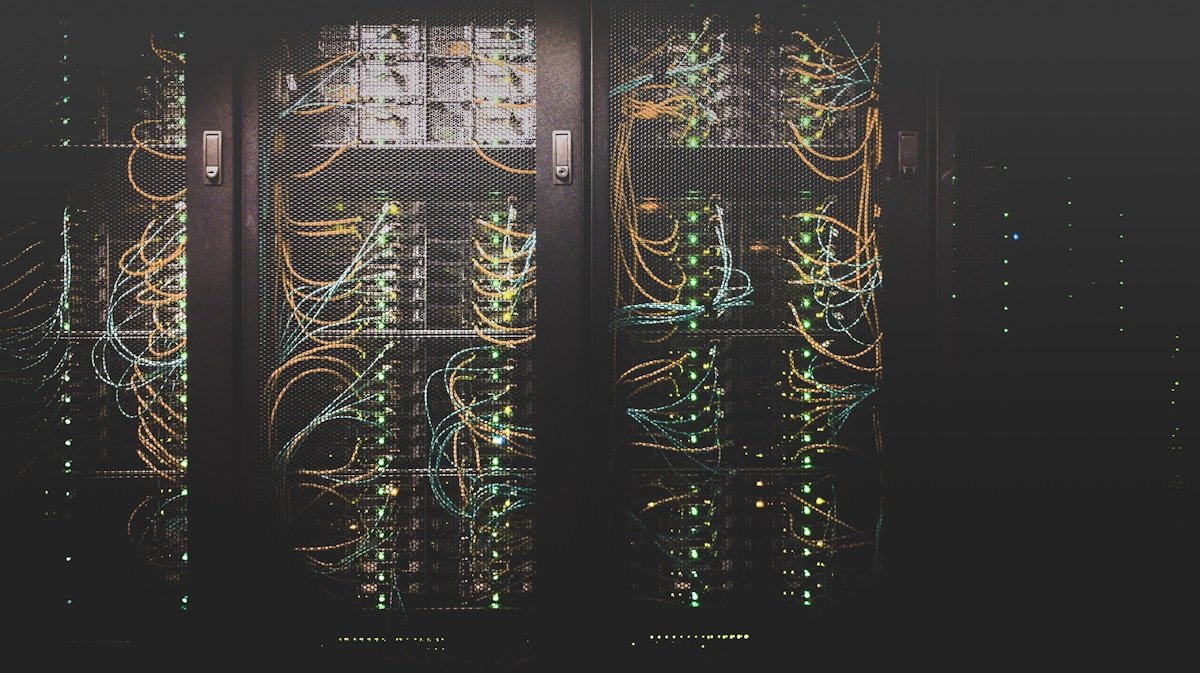
The most immediately apparent benefit of rackmount servers is dramatic space efficiency. Tower servers are essentially desktop computers scaled up — they stand independently, require individual power connections and cooling clearances, and consume significant horizontal floor space. As organizations add tower servers over time, they invariably end up with what IT teams refer to as “server sprawl” — hardware scattered across multiple rooms, under desks, in closets, and stacked dangerously in ad-hoc configurations.Rackmount servers solve this entirely. By standardizing on vertical stacking within a 19-inch rack enclosure, organizations can house an extraordinary amount of compute capacity in a minimal physical footprint:
A single 42U rack cabinet can house 42 1U servers, effectively consolidating what would otherwise be 42 separate tower units into a single cabinet occupying approximately 24 square feet of floor space (including required service clearance).
High-density blade server configurations within a rack chassis can achieve even higher consolidation ratios for specific workloads.
For businesses paying commercial real estate rates in major metropolitan areas, the space savings translate directly into measurable cost reduction. For data center operators paying by the rack unit, density is directly correlated with profitability.
Benefit 2: Thermal Management — Engineered Cooling and Energy Efficiency
Heat is the primary enemy of server hardware reliability and longevity. When servers are operated in environments without adequate, dedicated cooling — under desks, in shared office spaces, in un-air-conditioned closets — ambient temperatures rise to levels that cause thermal throttling (processors reducing their clock speed to prevent heat damage), accelerated component degradation, and ultimately premature hardware failure.Rackmount servers are specifically engineered for controlled, directional airflow management:
Front-to-Back Airflow Design: Cool air is drawn through the front face of the server via high-speed internal fans. The airflow moves across heat-sensitive components (CPUs, memory DIMMs, storage drives) before being exhausted out the rear panel.
Hot-Aisle/Cold-Aisle Containment: When multiple racks are deployed in a proper data center or server room environment, rack rows are alternately arranged so that server fronts face each other (creating “cold aisles” where cooled air is introduced from the floor) and server rears face each other (creating “hot aisles” where hot exhaust air is captured and returned to the cooling system). This containment system prevents hot exhaust from recirculating into server intake, dramatically improving cooling efficiency.
Precision Environment Control: Unlike a shared office space where HVAC is designed for human comfort, a dedicated server room or data center uses precision air conditioning units (CRACs or CRAHs) designed to maintain specific temperature and humidity targets around server equipment regardless of external conditions.
According to the U.S. Department of Energy’s Data Center Energy Efficiency guidelines, hot-aisle/cold-aisle containment systems reduce cooling energy consumption by 15% to 30% compared to non-contained mixed airflow environments. For organizations with significant server estates, this represents substantial annual energy cost savings.
Table 1: Infrastructure Comparison — Tower vs. Rackmount Server Environments
Feature
Tower Server Setup
Rackmount Server Setup
Physical Footprint
Large — individual servers require horizontal floor space
Compact — 42 servers in one 42U rack cabinet
Cooling Method
Ambient room air — uncontrolled and inefficient
Engineered front-to-back airflow with hot/cold aisle containment
Cable Management
Chaotic — individual cables per server, prone to tangles
Centralized PDUs with remote monitoring and circuit-level control
Administration Access
Requires individual keyboard/monitor per server
Single sliding KVM console drawer manages all rack servers
Scalability
Add new floor-standing units — requires space assessment
Add new units to available rack space — simple slide-in installation
Hardware Failure Response
Locate the specific tower, disconnect, repair
Slide the server out on rails without disturbing adjacent hardware
Environmental Monitoring
Minimal or manual
Temperature, power, and hardware health monitored per-unit and per-rack
Benefit 3: Modular Scalability — Growing Without Disruption
IT infrastructure demands rarely grow in smooth, predictable linear patterns. A company may onboard a major new client requiring an immediate 40% increase in database capacity. An AI research project may require a temporary burst of GPU compute resources. A disaster recovery scenario may require the rapid deployment of additional redundant systems.Rackmount architecture is specifically designed for modular, non-disruptive expansion:
Slide-Out Rail Systems: Most enterprise-grade 1U and 2U servers ship with mounting rail kits that allow the server to slide forward out of the rack on smooth rails — like a drawer — without requiring the server to be fully removed. Technicians can access internal components, swap drives, or add memory with the server in its slide-out service position while it continues to operate normally.
Hot-Swappable Components: Enterprise rackmount servers commonly feature hot-swappable hard drives (RAID arrays that allow individual drive replacement without system shutdown), hot-swappable redundant power supplies (if one PSU fails, the second takes the full load without any service interruption), and hot-swappable cooling fans. This component-level redundancy is a fundamental requirement for any environment with zero-downtime operational requirements.
Network-Attached Storage (NAS) and Storage Area Networks (SAN): Additional storage capacity can be added to a rack environment by simply sliding in new NAS trays or SAN expansion arrays connected to the existing rack switch infrastructure — no reconfiguration of existing servers required.
Benefit 4: Simplified Administration and Centralized Management
Managing a network of scattered, unorganized tower servers is one of the most time-consuming and error-prone challenges facing IT departments in growing organizations. Every server in a tower environment requires its own monitor port access, its own power source management, and its own individual intervention for maintenance — creating a fragmented, labor-intensive management process that scales poorly.Rackmount environments transform this challenge into a structured, centralized management workflow:
KVM Switch Integration: A single sliding console drawer (keyboard, video monitor, mouse) mounted in the rack can switch between controlling any server in the rack at the press of a button — eliminating the need for individual peripherals at every server.
Intelligent Power Distribution Units (iPDUs): Modern rack PDUs provide real-time monitoring of power consumption per outlet, remote power cycling capability (restart a locked server without physical access to the data center), and configurable alerts for circuit overload conditions.
Out-of-Band Management (IPMI/iDRAC/iLO): Enterprise rackmount servers include dedicated hardware management processors (Dell’s iDRAC, HP’s iLO, Intel’s IPMI) that allow administrators to access, monitor, and control server hardware — including the power button, BIOS settings, and console — remotely over a network connection, even when the main operating system is unresponsive or powered off.
Benefit 5: Physical and Logical Security
Enterprise data security is a multi-layered challenge that encompasses both cybersecurity systems and physical access control. Rackmount enclosures provide robust physical security capabilities that are difficult or impossible to implement with standalone tower server deployments:
Lockable Steel Enclosures: Rack cabinets are constructed from heavy-gauge steel with locking front doors (key lock, keypad, or biometric) and locking rear doors. Unauthorized physical access to server hardware — the most reliable path to data extraction that bypasses all software-level security controls — requires defeating the physical enclosure.
Centralized Cabling Within Enclosed Channels: All power and network cables are routed through the controlled environment of the rack, protected from accidental disconnection, equipment interaction, or intentional tampering.
Environmental Monitoring and Alerting: Modern intelligent rack systems can be equipped with door-opening sensors that send immediate alerts when a rack cabinet is opened, vibration sensors that detect physical tampering, and environmental sensors that alert IT staff to temperature excursions, moisture events, or power anomalies.
Table 2: Rackmount Server Selection Guide by Organization Size
Organization Size
Recommended Rack Configuration
Estimated Initial Investment
Key Priorities
Small Business (1–20 staff)
12U–18U wall-mount or floor cabinet with 2–4 1U servers
$3,000–$12,000
Simplicity, reliability, easy management
Mid-Market (20–100 staff)
24U–42U rack with 4–12 servers, redundant switches
Multiple 42U racks with blade servers and SAN storage
$45,000–$250,000+
High availability, hot-aisle/cold-aisle containment, automated monitoring
Data Center / Co-Location
Full data center rack deployment with redundant power feeds
$250,000+
Power efficiency (PUE), density, DCIM integration
The Cloud vs. On-Premise Rack: Finding the Right Balance
The rise of cloud computing (AWS, Azure, Google Cloud) has raised a legitimate question for many growing organizations: should we invest in physical rackmount infrastructure at all, or simply move everything to the cloud?The honest answer is that most growing businesses benefit from a hybrid approach:
Cloud for: Variable, elastic workloads that scale dramatically (seasonal traffic spikes, development and testing environments, disaster recovery secondary sites).
On-Premise Rackmount for: Workloads with consistent, predictable compute and storage requirements (database servers, internal applications, video surveillance NVR systems, on-site backup targets). At steady-state workloads, cloud costs are often 3 to 5 times higher per unit of compute than equivalent on-premise rackmount infrastructure over a 5-year horizon.
Understanding this trade-off allows organizations to make strategic infrastructure decisions based on workload characteristics rather than following an all-in commitment to either model.
Frequently Asked Questions
1. What is the difference between a 1U, 2U, and 4U rackmount server?
The “U” designation refers to the server’s height measured in rack units, where 1 rack unit (1U) = 1.75 inches. A 1U server is ultra-slim and optimized for maximum density in high-density computing environments — it typically accommodates two processors, large amounts of RAM, and several 2.5″ drive bays. A 2U server is 3.5 inches tall and provides additional internal space for larger 3.5″ drives, additional PCIe expansion cards, or higher-capacity power supplies — appropriate for storage-intensive workloads. A 4U server is 7 inches tall and accommodates large-scale storage (24+ drive bays), high-end GPU computing cards, or specialized hardware requiring maximum internal expansion space.
2. How much power does a typical rackmount server consume?
A modern enterprise 1U server (such as a Dell PowerEdge R650 or HP ProLiant DL360) typically consumes between 250 and 750 watts under normal operational load, depending on processor configuration, memory density, and storage drives installed. Full-rack configurations in dense environments can draw 8 to 20 kilowatts per rack — requiring dedicated 208V three-phase power circuits and carefully planned power distribution. Power consumption is a primary factor in data center operating cost calculations: at $0.10/kWh, a single 500W server consumes approximately $438 in electricity per year operating 24/7.
3. What is RAID, and why is it critical for rackmount server storage?
RAID (Redundant Array of Independent Disks) is a storage technology that combines multiple physical drives into a logical unit that provides either performance improvement, redundancy against drive failure, or both simultaneously. For enterprise rackmount servers, RAID is not optional — it is the primary protection against data loss due to hard drive failure, which is the single most common cause of server hardware failure. Common configurations: RAID 1 mirrors data across two drives (survives one drive failure); RAID 5 distributes data and parity across 3+ drives (survives one drive failure with read performance improvement); RAID 10 combines mirroring and striping across 4+ drives (survives multiple drive failures with highest performance, highest cost).
4. What networking equipment should I include in my server rack?
A well-configured server rack typically includes: a managed Ethernet switch (providing the internal network backbone connecting all servers — 1 GbE minimum, 10 GbE recommended for high-throughput applications); a firewall or UTM appliance (controlling traffic between the internal server network and the internet/WAN); a patch panel (organizing all structured cabling connections into a central, labeled panel); a KVM switch (centralized server console access); and an intelligent PDU (power distribution with per-outlet monitoring and remote control). For organizations requiring high availability, dual-redundant switches and dual power feeds to servers eliminate single points of failure.
5. How do I calculate how much rack space I need?
Start by inventorying all current and planned server and networking equipment in terms of rack units (U) required per device. Add your current equipment total, then add 40% to 50% additional capacity for future expansion over a 3-year horizon. Round up to the nearest standard rack size (12U, 18U, 24U, 36U, 42U, 48U). For example: 5 servers at 1U each (5U) + 2 switches at 1U each (2U) + patch panel (1U) + PDU (1U) + KVM console (1U) = 10U total current. Adding 50% expansion capacity = 15U — select an 18U cabinet. Always plan for more capacity than you think you need; under-racked environments are one of the most frustrating and avoidable constraints in IT operations.
6. What is out-of-band server management, and why does it matter?
Out-of-band management (also called IPMI, iDRAC, iLO, or BMC — Baseboard Management Controller) is a dedicated hardware processor built into enterprise servers that provides remote management access completely independent of the main operating system. Using out-of-band management, an IT administrator can remotely power cycle a crashed server, access the server console to diagnose a boot failure, modify BIOS settings, monitor hardware temperature and power readings, and even mount virtual media — all without any physical access to the server room. For organizations managing servers remotely or in co-location facilities, out-of-band management capability is not a luxury feature — it is a fundamental operational requirement.
7. Should I co-locate my rack in a data center or host it on-premise?
Co-location (placing your rack cabinet in a professional data center facility) versus on-premise hosting depends on your power, cooling, and connectivity requirements. Co-location is advantageous when: you require high-reliability power (multiple redundant feeds, UPS, diesel generator backup), precision cooling beyond what your office building can provide, high-bandwidth internet connectivity at competitive rates, or physical security standards beyond what an office environment can achieve. On-premise hosting is appropriate for organizations with small server estates (under 5 servers), budget constraints that make co-location monthly fees prohibitive, or data sovereignty requirements that mandate on-site hardware.
8. How often should rackmount server hardware be replaced?
Enterprise-grade rackmount servers are typically planned for a 3-to-5-year lifecycle in production environments. After this period, the hardware is typically moved to a secondary or development role or decommissioned. The primary drivers for replacement are: end of manufacturer hardware support (which eliminates firmware updates and security patches), component degradation (particularly hard drives and fans, which have measurable failure rate curves that increase sharply after 3–4 years), and performance inadequacy relative to workload growth. From a financial perspective, many organizations coordinate server replacement with capital depreciation cycles, replacing hardware on a 4-year schedule that aligns with standard IT asset depreciation.
9. How does a rackmount server infrastructure support business continuity and disaster recovery?
Rackmount infrastructure provides the physical foundation for enterprise business continuity in several critical ways. Geographic redundancy: Organizations can deploy primary racks at their main location and replicate critical data to a secondary rack deployment at a co-location or disaster recovery site. Hardware redundancy within the rack: Redundant power supplies, hot-swap drives in RAID arrays, and redundant network connections (NIC teaming) eliminate single points of failure within the primary site. Rapid hardware replacement: When servers are rack-mounted with rail kits, physically removing a failed server and installing a replacement takes minutes — not hours of disconnecting cables and shifting heavy tower units. Centralized backup targets: NAS or tape library units within the rack provide on-site backup targets for rapid data recovery without depending on internet connectivity or cloud services.
Final Thoughts: Infrastructure as a Strategic Investment
For organizations serious about building reliable, scalable digital operations, the decision to invest in proper rackmount server infrastructure is not a technical nicety — it is a strategic foundation. The operational benefits in space efficiency, cooling performance, scalability, administrative centralization, and physical security compound over time, making a well-architected rack environment dramatically more resilient and manageable than the equivalent compute capacity distributed across unorganized tower servers.The upfront investment in rackmount infrastructure — hardware, rack cabinet, supporting networking equipment, and the professional expertise to design and deploy it correctly — pays dividends in reduced downtime, lower long-term operational costs, faster incident response, and a technology foundation that scales confidently with organizational growth.
Shahenshah Mughal is a seasoned content strategist and business writer with over 8 years of experience in digital publishing, entrepreneurship, and financial literacy. He has contributed in-depth guides and analysis across business development, small business strategy, and technology trends. Shahenshah holds a degree in Business Administration and has worked with multiple digital media platforms to craft content that educates and empowers readers. His writing philosophy centers on turning complex business concepts into actionable, practical advice for everyday entrepreneurs.