Barbara Roufs: The Life, Legacy, and Cultural Impact of a 1970s Drag Racing Icon
Barbara Roufs: The Life, Style, and Cultural Legacy of a 1970s Drag Racing Icon
A few years ago, while browsing a digitized archive of vintage American motorsports photography, I came across a striking, unfiltered trackside photograph. It was taken at a Southern California drag strip in the early 1970s — one of those images with the particular grain and warmth of Kodachrome film that makes the past feel both close and irretrievably distant simultaneously.
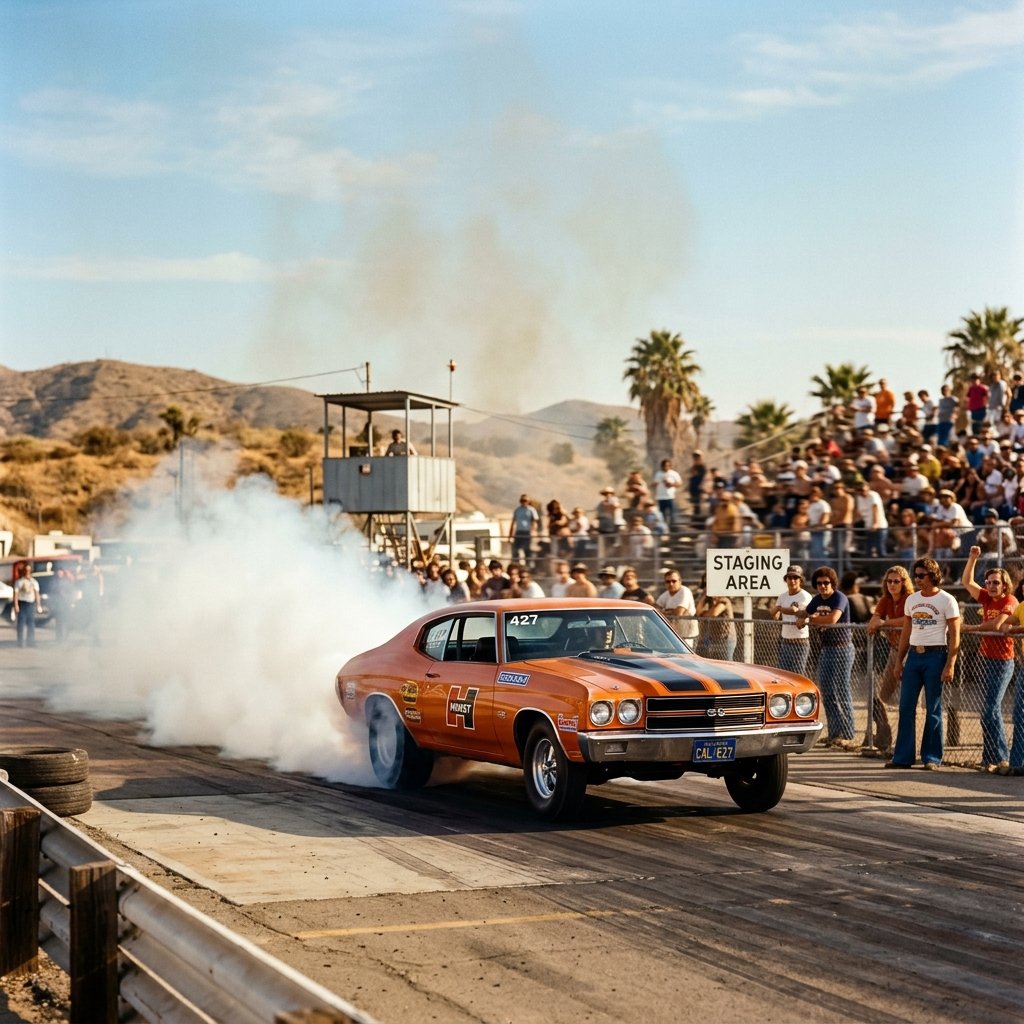
The photograph captured the specific sensory excess of the era: the heat radiating in visible waves off the asphalt, a roaring Top Fuel dragster in the background trailing a ribbon of tire smoke, oil stains on the concrete, and standing in the foreground a woman with long, straight sun-lit hair, high-waisted denim shorts, and platform shoes, smiling with the relaxed confidence of someone who belonged exactly where she was.
The woman was Barbara Roufs.
She was not a race car driver, a mechanic, or a team owner. She did not set speed records or design combustion systems. Yet she became one of the most recognizable and enduring visual symbols of what many motorsports historians now refer to as the golden age of American drag racing — a period of raw, community-driven, nitromethane-scented motorsports culture that existed for roughly a decade before corporate sponsorships, national television contracts, and safety regulations transformed the sport into something fundamentally different.
Her image did not just promote events or attract spectators. It captured a specific cultural collision: West Coast hot rod engineering culture, the youth liberation movement, the fashion revolution of the early 1970s, and the particular sensory intensity of a sport built around machines that could cover a quarter mile in under four seconds, producing approximately 10,000 horsepower from an engine the size of a large suitcase.
Decades after those photographs were taken, her images have resurfaced on social media platforms, digital archives, and motorsports history communities — introducing her to a new generation of retro-culture enthusiasts, automotive historians, and photography collectors who recognize in her photographs something authentic and irreplaceable.
This article provides a thorough analytical look at the life and cultural context of Barbara Roufs, the historical environment that shaped her image and role, and the broader significance of women in 1970s motorsports culture.
Historical Context: The Golden Age of American Drag Racing
To understand Barbara Roufs and her cultural significance, it is essential to understand the specific historical moment in which she became prominent.
Table 1: Timeline of American Drag Racing's Golden Age (1960s–1970s)
| Year / Period | Key Development | Cultural Significance |
|---|---|---|
| Late 1950s | NHRA (National Hot Rod Association) standardizes drag racing rules and safety protocols | Transforms informal street racing into organized, spectator-friendly competition |
| Early 1960s | Top Fuel dragsters appear — fuel-injected nitromethane engines producing 1,000+ HP | Massive performance leap; creates a new category of specialist performance machinery |
| 1964–1966 | NHRA establishes national touring series and national championship points | Drag racing transitions from regional to national competitive sport |
| Late 1960s | Southern California becomes global center of drag racing innovation (OCIR, Irwindale, Lions) | Concentration of tracks, builders, and talent in one geographic region |
| Early 1970s | Peak of nitromethane drag racing as community-driven spectacle; Top Fuel engines approaching 2,500 HP | The era of Barbara Roufs — maximum spectacle, minimal corporate structure |
| Mid-1970s | Television coverage begins; corporate sponsorships reshape the aesthetic and economics of the sport | Marks end of the raw, community-driven golden age era |
Southern California Car Culture: The World That Made Her
Barbara Roufs' prominence was inseparable from the specific cultural geography of Southern California in the late 1960s and early 1970s. No other place in the world could have produced the combination of conditions that gave rise to the golden age drag racing scene she inhabited.
In the decades following World War II, Southern California became the global capital of automotive customization and performance engineering. Several intersecting forces created this concentration:
The Climate Advantage: Southern California's year-round warm, dry weather allowed outdoor mechanical work and year-round motorsports events with no seasonal interruptions — an enormous practical advantage over drag racing communities in the Midwest or Northeast.
The Post-War Economic Surge: The massive industrial infrastructure built during World War II around aircraft manufacturing, shipbuilding, and defense contracting left Southern California with an unusually high concentration of machining expertise, specialized metalworking shops, and engineers with deep knowledge of high-performance mechanical systems. When the war ended, many of these skilled workers channeled their expertise into automotive performance — building custom engines, chassis, and fuel systems for the emerging hot rod culture.
The Youth Demographic: Southern California's post-war population boom created one of the largest concentrations of young people in the country, with disposable income (from growing manufacturing and service industries), access to cars, and a cultural orientation toward outdoor, high-energy leisure activities.
The Geography: Wide, flat, straight streets and plenty of open desert provided natural testing grounds before formal drag strips were established. When purpose-built drag strips did appear — Orange County International Raceway (OCIR), Irwindale Speedway, Lions Associated Drag Strip — they became immediate social hubs rather than merely sporting venues.
By the early 1970s, weekend drag racing events at tracks like OCIR were not merely competitions — they were community festivals. Tens of thousands of spectators attended. Food vendors, automotive parts sellers, and custom merchandise operators lined the pit areas. Live music occasionally accompanied the racing. The atmosphere was closer to a county fair with a deafening, fuel-scented industrial dimension than to a conventional sporting event.
The Role of Trophy Queens in Motorsports Marketing
During the 1950s, 1960s, and early 1970s, "trophy queens" or "track queens" were a standard feature of major motorsports events across the United States — from NASCAR to NHRA drag racing to USAC Indy car events. Their role encompassed several distinct functions:
Promotional Representation: Trophy queens were the human face of a sport defined by heavy, loud machinery. Presenting an attractive, engaging, accessible human presence in the winner's circle made the sport's visual identity more immediately comprehensible to general audiences — particularly families and women attending events.
Sponsor Promotion: Major event sponsors (fuel companies, automotive parts manufacturers, tire brands) used trophy queens as brand ambassadors, incorporating them into print advertisements and promotional materials.
Photography and Print Media: Specialized automotive publications — drag racing papers like Drag News, Hot Rod Magazine, Car Craft — regularly featured trophy queens in event coverage. These photographs were both editorial documentation and promotional content.
Winner's Circle Ceremony: The formal presentation of trophies in the winner's circle — typically featuring one or more trophy queens alongside the winning driver — provided a standard visual format that communicated the ceremony and excitement of victory for both trackside spectators and print media audiences.
Barbara Roufs: What Distinguished Her
Within the community of Southern California drag racing promotional models, Barbara Roufs developed a particular visibility and cultural resonance that distinguished her from contemporaries operating in similar roles. Several factors contributed to this distinction:
The Authenticity of Style
The early 1970s marked a genuine fashion revolution, particularly in Southern California youth culture. The formal, conservative pageant aesthetic of 1950s and 1960s motorsports presentation — structured dresses, carefully styled hair, professional-distance poses — was being replaced by something far more authentic to the youth liberation movement.
Barbara Roufs embodied this fashion transition with what appears, in photographs, to be genuine comfort and authenticity rather than studied performance. Her look was:
- Practical and Context-Appropriate: High-waisted denim shorts, halter tops, and platform shoes were practical choices for the hot asphalt and outdoor conditions of a Southern California drag strip — functional as much as fashionable.
- Authentic to California Culture: Rather than appearing artificially coiffed or glamorously distant, her style reflected the actual aesthetic of California outdoor culture — sun-kissed, relaxed, genuinely present in the environment.
- Of the Moment: Her fashion sensibility was current rather than backward-looking — aligned with the same cultural currents that were producing the music, art, and social movements of early 1970s California.
The Photographic Record
The concentrated attention of specialist motorsports photographers — who documented these events with a depth and consistency that general press photography rarely matched — produced an extensive photographic record of Barbara Roufs in the context of drag strip culture. These photographs were not studio shots or staged promotional images. They were candid, environmentally embedded documentation of a real person in a real cultural moment.
This documentary authenticity is a key factor in why these photographs have resonated so powerfully when rediscovered digitally. They feel like evidence of a specific time and place — not a constructed image.
Women in Motorsports: A Critical Transitional Period
Barbara Roufs' prominence coincided with a critical period of transition for women's roles in the broader motorsports world, reflecting larger transformations in American gender culture during the early 1970s.
Table 2: Women's Roles in 1970s Motorsports
| Role Category | Representative Figures | Cultural Significance |
|---|---|---|
| Promotional / Track Queen | Barbara Roufs, Della Woods, Shirley Shahan (early career) | Provided human face for sport; documented the community's social culture |
| Competitive Drivers | Shirley Muldowney (Top Fuel), Paula Murphy (land speed) | Challenged the assumption that women could not compete at the highest levels |
| Team / Crew Personnel | Various unnamed women in family racing operations | Women have always been present in the mechanical/operational side of family teams |
| Media and Journalism | Early female motorsports journalists in specialized publications | Began the transition of motorsports media toward more diverse representation |
The co-existence of competitive pioneers like Shirley Muldowney — who was fighting for and eventually winning her NHRA Top Fuel license during this exact period, going on to become a three-time world champion — and promotional figures like Barbara Roufs reflects the complexity of gender transition in this era. Society was simultaneously opening certain doors (competitive driving, professional licensing) while maintaining traditional promotional frameworks (trophy queens) that would be questioned and gradually reformed in subsequent decades.
Neither role was unimportant. Muldowney proved that women could dominate the highest level of competitive motorsports. Barbara Roufs and others in similar roles provided authentic social documentation of a community at its most vibrant historical peak.
The Digital Rediscovery: Why These Images Resonate Now
The resurgence of interest in Barbara Roufs and the broader 1970s drag racing era is inseparable from the dynamics of digital archiving and social media culture. Throughout the 1970s, specialist motorsports photographers including Bob McClurg, Steve Reyes, and others produced extensive photographic documentation of the NHRA and independent track racing scenes. These images were primarily published in specialized automotive press with relatively limited circulation.
When surviving prints and negatives were digitized — through the efforts of motorsports historians, private collectors, and the photographers themselves — and shared on platforms like Flickr, Pinterest, Reddit, and Instagram, they reached audiences orders of magnitude larger than their original publication contexts.
These images captured immediate, widespread attention for several interconnected reasons:
Pre-Corporate Authenticity: The images document a version of motorsports culture that predates the comprehensive commercial transformation that corporate sponsorship, national television, and professional marketing brought to the sport. The rawness, the community feel, and the genuine physical danger visible in these images represent something that feels increasingly rare in contemporary media-managed sporting culture.
Nostalgia as Cultural Currency: The early 1970s specifically occupy a complex position in American cultural memory — the last period before the oil crisis, Watergate, and economic stagflation fundamentally altered American optimism. Images from this period carry a particular nostalgic charge for audiences old enough to have lived through it and cultural fascination for younger audiences who encounter it as historical mythology.
Photographic Quality: The Kodachrome and Ektachrome film of this era has a warmth, grain, and color palette that is visually distinctive and widely perceived as beautiful in a way that early digital photography cannot replicate. These aesthetic qualities give the photographs an immediate visual appeal that transcends their documentary content.
Frequently Asked Questions
1. Who was Barbara Roufs, and what was her specific role in drag racing?
Barbara Roufs was a Southern California promotional model and trophy queen who worked primarily at drag racing events organized by the National Hot Rod Association (NHRA) and at independent tracks including Orange County International Raceway (OCIR) and Irwindale Speedway during the early 1970s. Her role involved presenting trophies to race winners, representing event sponsors in promotional materials, and serving as part of the visual presentation of the sport to both trackside spectators and print media audiences. She was not a race car driver, team member, or mechanical professional — her contribution was specifically in the promotional and visual representation dimension of the motorsports community.
2. What was the NHRA, and why was it important to the drag racing scene Barbara Roufs was part of?
The National Hot Rod Association (NHRA) was founded in 1951 by Wally Parks and is the primary sanctioning body for organized drag racing in the United States. The NHRA established standardized safety rules, performance classifications, and competition formats that transformed drag racing from informal and sometimes illegal street racing into an organized, spectator-friendly sport with national competitions and a championship points system. By the early 1970s, the NHRA's events — including its national championship series — were among the largest and most attended motorsports events in the country, with major tracks like OCIR regularly drawing tens of thousands of spectators.
3. What made Southern California the center of drag racing culture in the 1970s?
Several factors converged to make Southern California the global epicenter of performance automotive culture during this period: the concentration of post-war aerospace and defense industry engineering expertise that translated into automotive performance innovation; the year-round warm climate enabling continuous outdoor mechanical development and racing; the high population density of young people with disposable income and access to automobiles; and the geographic availability of wide, straight testing roads and eventually purpose-built drag strips. The resulting community produced innovations in engine design, fuel chemistry (nitromethane fuel development), chassis engineering, and tire technology that dominated world drag racing for decades.
4. How did the role of trophy queens evolve from the 1950s to the 1970s?
In the 1950s and early 1960s, motorsports promotional models typically wore formal, conservative attire consistent with the pageant aesthetic of the era — structured dresses, carefully arranged hair, and a presentational style that emphasized decorum and distance. By the early 1970s, the influence of the women's liberation movement, the youth fashion revolution, and the counter-cultural aesthetic of California beach and outdoor culture had fundamentally transformed the visual presentation of promotional roles. The formality gave way to authenticity — comfortable, casual clothing appropriate to the outdoor event environment, a more relaxed and engaged interaction with the setting, and a visual style that reflected contemporary youth culture rather than a formal presentational tradition.
5. Who were the other notable women associated with 1970s drag racing culture?
Several women made significant contributions to the 1970s drag racing world in different capacities. Shirley Muldowney, the most prominent competitive figure, became the first woman licensed to drive a Top Fuel dragster and eventually won three NHRA Top Fuel world championships (1977, 1980, 1982), her story later dramatized in the 1983 film Heart Like a Wheel. Paula Murphy was an early female land speed record holder. Various female track announcers, photographers, and automotive journalists also began establishing professional presences in the sport during this period. In the promotional sphere, contemporaries of Barbara Roufs including Della Woods and others also became known figures within the Southern California racing community.
6. What happened to the golden age drag racing tracks where Barbara Roufs worked?
Most of the classic Southern California drag strips of the early 1970s no longer exist as racing venues. Orange County International Raceway (OCIR) closed in 1983 when its land was sold for residential development — it is now a housing development in Irvine, California. Lions Associated Drag Strip in Wilmington, California closed in 1972. Irwindale Speedway (now the Irwindale Event Center) still operates as a racing and entertainment venue but no longer hosts major professional drag racing events. The closure of these tracks was a direct consequence of Southern California's rapid suburban expansion and the escalating real estate values that made urban and peri-urban land too valuable for sports venues requiring large, flat acreage.
7. How did photography and print media contribute to the cultural documentation of 1970s drag racing?
Specialist motorsports photographers who worked the Southern California drag racing scene in the 1970s — including Steve Reyes, Bob McClurg, and others — produced extraordinarily comprehensive visual documentation of the culture. These photographers worked for specialized automotive publications (Drag News, Hot Rod Magazine, Car Craft, Drag Racing USA) that served the tight-knit drag racing community with event coverage, driver profiles, and technical analysis that general sports media did not provide. The cumulative photographic record they created has become the primary visual historical archive of the era — the images that social media audiences are discovering and rediscovering today are largely the product of these dedicated community photographers working with film cameras at trackside in conditions that were often challenging for equipment and photographers alike.
8. Why has Barbara Roufs specifically become a recurring figure in vintage motorsports internet communities?
Several factors contribute to her particular cultural resonance in digital communities. First, the photographs featuring her are genuinely striking — excellent composition, authentic subject presence, and the distinctive visual quality of 1970s Kodachrome film photography. Second, her image represents a confluence of multiple nostalgia vectors simultaneously: vintage fashion, classic automotive culture, California lifestyle mythology, and the pre-corporate innocence of community-driven racing. Third, the relative scarcity of biographical information about her — her life outside her promotional work in the racing community is not well documented — gives her an air of historical mystery that digital communities find compelling to research and discuss. Fourth, the broader resurgence of interest in 1970s culture more generally across fashion, music, and visual aesthetics has created a receptive audience for authentic documentation of that era.
9. What does the legacy of figures like Barbara Roufs tell us about the history of women in motorsports?
The legacy of Barbara Roufs and contemporary figures in similar roles reveals important complexity about women's participation in motorsports culture. These women were not peripheral or passive — they were active, visible, and valued participants in their community who contributed to the promotional, social, and visual fabric of the sport. Their presence documented in photographs tells us that drag racing's golden age was not a purely male environment, but a community that included women in multiple roles — competitive drivers, mechanical crew members on family teams, photographers, journalists, promotional figures, and spectators. The tendency to either ignore these women in historical accounts or to reduce their significance to their appearance misses the genuine sociological complexity of their presence and the authentic community they helped constitute. A full history of 1970s American motorsports must include them.
Final Thoughts: An Enduring Image of American Speed
Barbara Roufs did not win races, build engines, or break records. She did not appear in national advertising campaigns or achieve celebrity status beyond the community she inhabited. What she did was be genuinely present in an extraordinary moment in American automotive culture — with an authenticity of style and presence that photography captured and preserved.
The fact that her image continues to resonate with audiences who were not born when those photographs were taken is a testament to what great photography can do: preserve not just a person's appearance but the specific cultural electricity of a time and place that no longer exists in its original form. Standing trackside at OCIR in the early 1970s, surrounded by the roar of nitromethane-fueled engines and the energy of tens of thousands of spectators, Barbara Roufs was part of something real — and the photographs prove it.